
Google Ads management services are professional solutions that help businesses run, optimize, and scale their paid search advertising campaigns on Google’s advertising platform. Rather than managing campaigns independently, businesses partner with agencies or consultants to handle every aspect of their Google Ads accounts, from strategy and setup to daily optimization and reporting.
When you outsource your Google Ads management, a team of certified professionals takes responsibility for your account’s performance. They conduct keyword research, write ad copy, manage bids, monitor spend, analyze data, and continuously refine campaigns to improve results. This differs significantly from self-managed campaigns, where business owners or in-house teams handle all these tasks without specialized expertise.
The Google Ads ecosystem is complex. It includes multiple campaign types—Search, Shopping, Performance Max, Display, Video, and Demand Gen—each with unique settings, optimization strategies, and targeting options. Professional management services navigate this complexity, ensuring your campaigns align with your business objectives while maximizing return on ad spend.
Professional Google Ads management is particularly valuable because the platform rewards expertise. Agencies with deep experience understand bidding algorithms, audience targeting nuances, conversion tracking implementation, and optimization best practices that drive measurable business results.
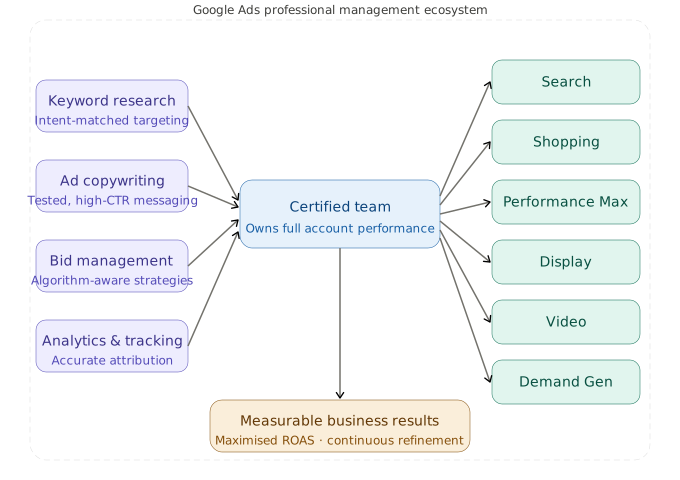
Professional agencies optimize campaigns specifically to improve ROAS, meaning you generate more revenue per dollar spent on ads. They analyze historical data, identify top-performing keywords and audiences, and reallocate budget toward winners while cutting underperforming elements.
Experienced managers improve your Quality Score—a metric Google uses to rate your ads, keywords, and landing pages. Higher Quality Scores result in lower CPCs, meaning you pay less for each click while maintaining visibility. This compounds over time, dramatically reducing your overall advertising costs.
Quality Score directly impacts both your CPC and ad position. Professional management ensures your keywords match your ad copy and landing pages, your ads include relevant extensions, and your landing pages load quickly and provide excellent user experience. All these factors improve Quality Score.
Agencies don't just drive traffic—they drive qualified traffic that converts. They refine audience targeting to reach people most likely to buy, test different ad messages to find what resonates, and optimize landing pages for conversion. The result is more conversions from the same ad spend.
Professional managers use advanced audience targeting capabilities most businesses overlook. They layer demographic, behavioral, and custom audiences to reach the exact people most likely to purchase. They implement remarketing campaigns to re-engage visitors who didn't convert initially.
Ineffective campaigns waste money on irrelevant clicks, poor-quality leads, or campaigns that never had strong fundamentals. Professional management continuously monitors spend, removes underperforming keywords, refines negative keywords lists, and pauses low-performing ads—preventing waste before it happens.
Once a campaign proves profitable, professional managers know exactly how to scale it safely. They adjust budgets strategically, test new keywords in the same vein as top performers, expand to new audiences, and maintain ROI while increasing total conversions. This systematic approach to scaling prevents the common pitfall of losing profitability when increasing spend.
Professional Google Ads management focuses on metrics that directly impact your business:
Professional managers optimize toward the metrics most important to your business, whether that’s maximizing conversions at a target CPA, improving ROAS, or increasing overall revenue.
Search advertising is the foundation of most Google Ads strategies. These campaigns display text ads when people search Google for specific keywords related to your business.
Professional search campaign management includes comprehensive keyword research. Managers identify high-intent keywords—searches indicating the person is ready to buy or take action. They distinguish between different keyword types: competitors searching your brand name, people looking for solutions you provide, and people researching before they’re ready to buy.
Keyword match types are crucial. Exact match limits your ads to searches that closely match your keyword, providing high relevance but lower volume. Phrase match shows your ads for searches containing your keyword phrase in any order, balancing relevance and volume. Broad match casts a wider net, showing ads for related searches, but requires careful negative keyword management.
Negative keywords prevent your ads from showing for irrelevant searches. For example, a law firm would add “free” as a negative keyword to avoid paying for clicks from people seeking free legal advice rather than legal services.
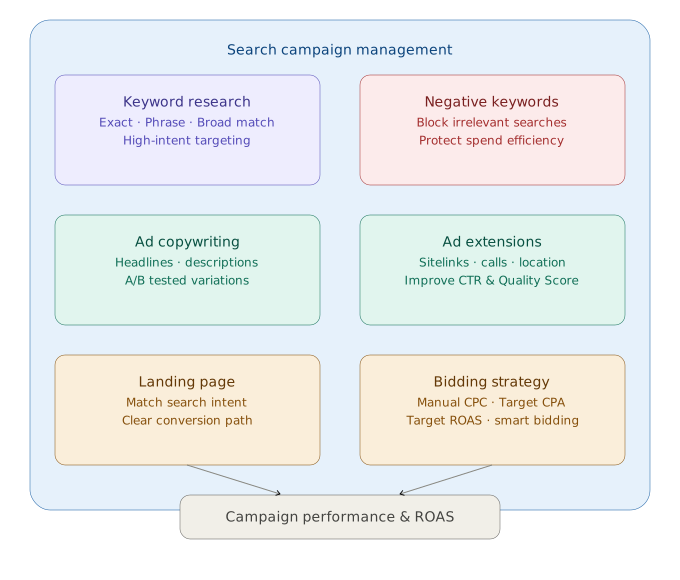
Ad copywriting is both art and science. Professional managers write headlines and descriptions that highlight your unique value, include relevant keywords for relevance, and include compelling calls to action. They test multiple ad variations to identify which messaging resonates with your audience.
Ad extensions expand your ads with additional information—additional links (sitelinks), phone numbers (call extensions), location information, promotional offers, or structured data about your business. Well-implemented extensions improve CTR and Quality Score.
Landing page optimization ensures the page someone lands on after clicking your ad matches their search intent and provides a clear path to conversion. Professional services often include landing page analysis and recommendations, though many agencies partner with specialists for deeper optimization.
Bidding strategies vary from manual CPC (you set the bid) to smart bidding options like Target CPA (Google automatically adjusts bids to hit your target cost per action) or Target ROAS (Google adjusts bids to hit your target return on ad spend). Professionals select the right strategy based on conversion data and business goals.
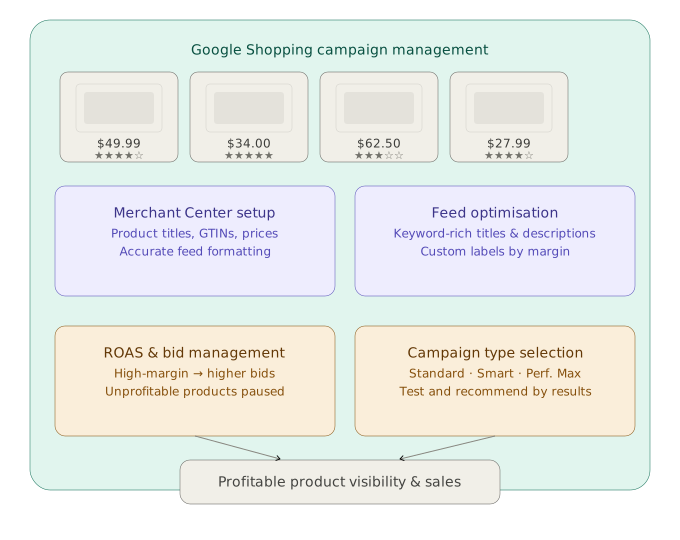
E-commerce businesses rely on Google Shopping ads to display products directly in search results. These ads show product images, prices, reviews, and availability—making them highly effective for driving qualified traffic.
Shopping ad success begins with proper Google Merchant Center setup. Your product feed—the file containing all product information—must be complete, accurate, and properly formatted. Professional managers verify that product titles, descriptions, prices, inventory status, and product identifiers (GTINs) are correct.
Feed optimization is critical. Product titles should include relevant keywords naturally. Product descriptions should highlight key attributes. Custom labels allow you to segment products by profitability, margin, or other criteria. Professional managers optimize feeds to improve visibility and Quality Score.
Shopping campaigns are measured by ROAS. Professional managers analyze which products generate profitable sales and which don’t, then adjust bids accordingly. High-margin products receive higher bids while low-margin products receive lower bids—or are paused entirely.
Professionals also manage the choice between traditional Shopping campaigns and newer options like Performance Max (which combines shopping with other channels) and Smart Shopping (which uses Google’s AI to optimize across placements). They test different approaches and recommend based on your results.
Performance Max campaigns represent Google’s AI-driven approach to advertising. Instead of managing individual keywords and placements, you provide audience signals and creative assets, and Google’s AI automatically finds the best ways to spend your budget across all its channels—Search, Display, YouTube, Gmail, and more.
Professional Performance Max management involves audience signal optimization. You provide information about your ideal customer—their interests, demographics, purchase intent, and online behavior—and Google’s AI uses this to find similar people across its network.
Creative asset management is equally important. You provide multiple headlines, descriptions, images, and videos. Google’s AI tests combinations automatically, learning which creative performs best for different audiences and placements. Professional managers ensure you provide high-quality, diverse creative assets.
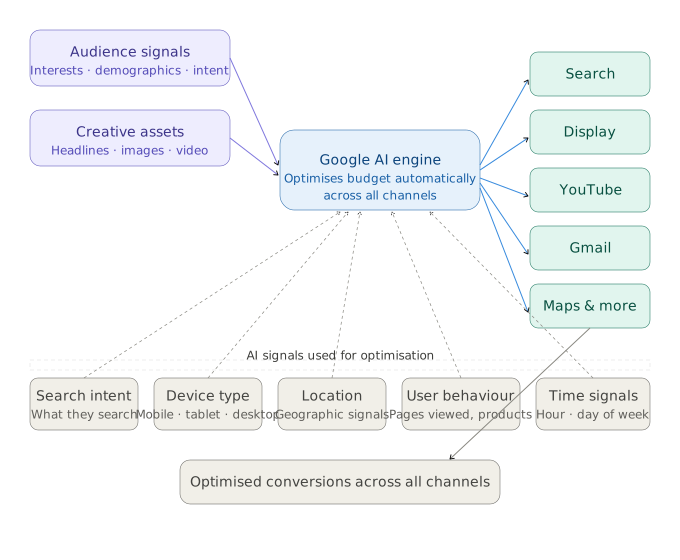
The AI signals that drive Performance Max include search intent (what people are searching for), device type (phone vs. tablet vs. desktop), geographic location, user behavior (pages visited, products viewed), and time-based signals (time of day, day of week). Professionals configure these signals to match your audience and goals.
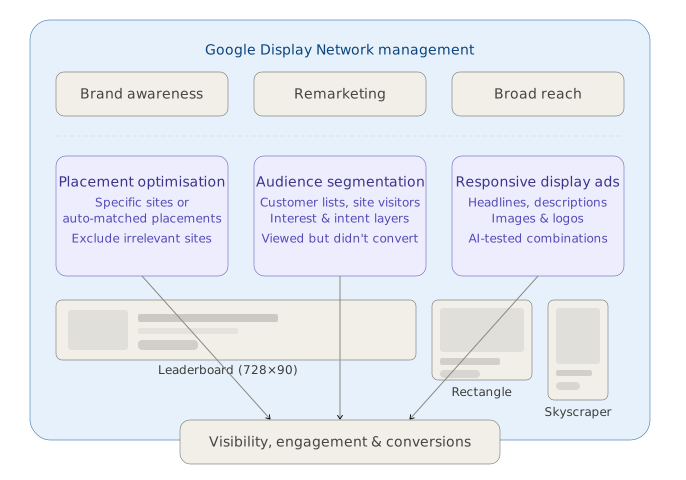
Display ads are image and text ads shown on websites across Google’s Display Network. These campaigns are excellent for brand awareness, customer remarketing, and reaching broad audiences with visual messages.
Display campaign management includes placement optimization—deciding which websites your ads appear on. Professionals can target specific placements directly, or use automatic placements where Google matches your ads to relevant websites.
Audience segmentation is crucial. Professional managers build custom audiences based on customer lists, website visitors, or interests. They layer audiences to focus on people most likely to convert—for example, people who visited your product page but didn’t purchase.
Responsive display ads automatically adjust their size, appearance, and format to fit different spaces on websites. Professionals provide headlines, descriptions, images, and logos, and Google’s system optimizes the combinations.
Search advertising is the foundation of most Google Ads strategies. These campaigns display text ads when people search Google for specific keywords related to your business.
Professional search campaign management includes comprehensive keyword research. Managers identify high-intent keywords—searches indicating the person is ready to buy or take action. They distinguish between different keyword types: competitors searching your brand name, people looking for solutions you provide, and people researching before they’re ready to buy.
Keyword match types are crucial. Exact match limits your ads to searches that closely match your keyword, providing high relevance but lower volume. Phrase match shows your ads for searches containing your keyword phrase in any order, balancing relevance and volume. Broad match casts a wider net, showing ads for related searches, but requires careful negative keyword management.
Negative keywords prevent your ads from showing for irrelevant searches. For example, a law firm would add “free” as a negative keyword to avoid paying for clicks from people seeking free legal advice rather than legal services.
The AI signals that drive Performance Max include search intent (what people are searching for), device type (phone vs. tablet vs. desktop), geographic location, user behavior (pages visited, products viewed), and time-based signals (time of day, day of week). Professionals configure these signals to match your audience and goals.
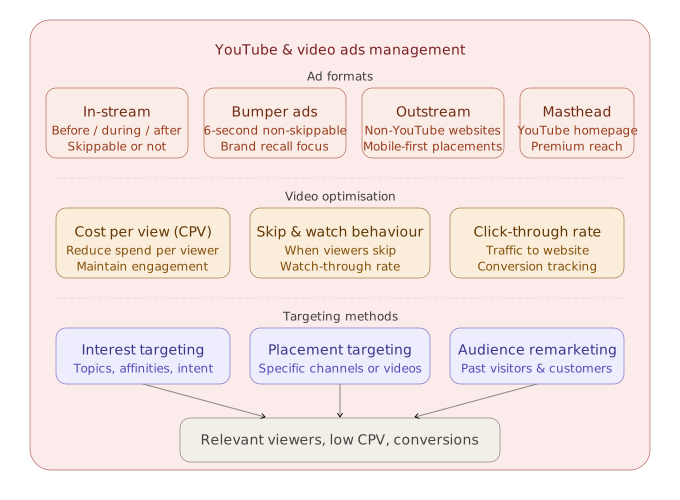
Video advertising on YouTube reaches billions of users daily. Professional video management includes in-stream ads (that play before, during, or after YouTube videos), bumper ads (short six-second ads), outstream ads (on non-YouTube websites), and masthead ads (premium placements on YouTube’s homepage).
Video optimization focuses on reducing cost per view (CPV) while maintaining engagement. Professionals analyze viewer behavior—how long people watch before skipping, whether they watch to completion, whether they click through to your website.
YouTube targeting options include interest-based targeting, placement targeting (specific channels or videos), and audience remarketing. Professionals use these to ensure videos reach relevant viewers.
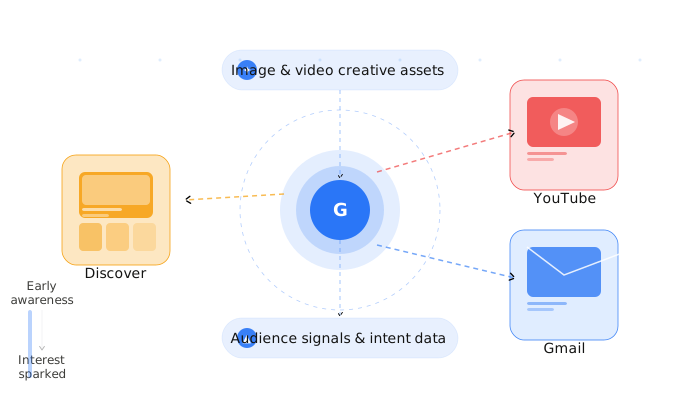
Demand Gen campaigns are Google’s newer offering for discovery-focused advertising. These campaigns appear across Google Discover, YouTube, and Gmail, using image and video assets to engage audiences early in their consideration journey.
Professional Demand Gen management focuses on visual creativity and audience signals. Since these campaigns target people in early stages of interest rather than active searchers, the approach differs from Search campaigns. Professionals help you reach broader audiences with visually compelling content designed to spark interest.
Local Service Ads (LSAs) represent a distinct advertising model from traditional Google Ads. Instead of paying per click, you pay per qualified lead that Google verifies has called or messaged your business.
Professional LSA management begins with setting up your account properly, verifying your business information, and ensuring your service areas and categories are correctly configured. Google requires verification of your business before you can run LSAs.
Lead verification is a unique aspect of LSAs. Google verifies that leads actually contacted your business before charging you. This means you only pay for genuine business inquiries, not wasted clicks.
Google Guaranteed is a program associated with LSAs offering customers assurance about your business. Participating in Google Guaranteed (when available in your category) can increase visibility and customer confidence, but requires meeting certain standards.
Professional LSA management includes reputation management—encouraging satisfied customers to leave reviews, responding to negative reviews professionally, and maintaining a strong reputation profile. Your review rating directly impacts your visibility in LSA results.
Local lead generation strategies for LSAs focus on conversion optimization. Professionals ensure your business profile is complete, your response times are fast, your messaging addresses common customer questions, and your service area coverage matches where you can actually service customers.
Google Ads strategies must adapt to different industries because user intent, sales cycles, regulations, and competitive landscapes vary dramatically.
The home services sector—including HVAC, plumbing, roofing, electrical work, and pest control—benefits greatly from Google Ads. Home service companies typically serve local geographic areas and benefit from highly intent-driven searches like “emergency plumber near me” or “roof repair [city].”
Professional management for home services focuses on:
Cleaning service businesses—residential cleaning, commercial cleaning, carpet cleaning, window cleaning—face competitive local markets where Google Ads can deliver strong ROI.
Professional management emphasizes:
Construction advertising involves different dynamics. Leads are higher-value, sales cycles are longer, and decision-making involves multiple people.
Professional management for construction includes:
Legal advertising requires specialized knowledge because Google has strict policies about lawyer advertising, and legal services are highly regulated.
Professional legal advertising management requires:
B2B software and managed service providers have longer sales cycles and different conversion metrics than B2C businesses.
Professional SaaS and MSP Google Ads management includes:
Long sales cycle management: Maintaining campaigns over months-long sales processes where single conversions represent significant revenue
Proper account structure is foundational to Google Ads success. A well-organized account allows for better performance tracking, clearer budget allocation, and more effective optimization.
A Google Ads account contains campaigns. Each campaign has independent budgets, bidding strategies, and targeting settings. Most businesses organize campaigns by business objective, product/service category, or target audience.
Within campaigns are ad groups. Each ad group contains related keywords, ads, and audiences. The key principle is that keywords within an ad group should be thematically related so that ads are highly relevant to searches.
This structure matters because Google rewards relevance. When someone searches a keyword, Google shows the ad from the ad group containing that keyword. If your ad and landing page are highly relevant to the search, Google improves your Quality Score. Higher Quality Scores reduce your CPC and improve ad position.
Professional managers design account structures that balance organization and performance. Too many campaigns and ad groups create management complexity. Too few campaigns make it difficult to track what’s driving results.
Conversion tracking sits above individual campaigns. It’s essential to set up proper conversion tracking from the beginning. Professional services ensure all important actions are tracked—purchases, form submissions, phone calls, appointment bookings—and that data flows properly into Google Ads to inform bidding algorithms and reporting.
Successful Google Ads campaigns begin with thorough keyword research. Professional keyword research goes beyond simple brainstorming to identify keywords where your audience is searching and where you can compete profitably.
Commercial intent keywords indicate someone is ready to buy or take action. “Buy widget online,” “widget pricing,” “best widget for [use case],” or “widget near me” all show commercial intent. These keywords usually convert well but face more competition and higher CPCs.
Transactional search terms are slightly different—they indicate someone is actively looking to complete a transaction or service request. Keywords like “schedule appointment,” “book consultation,” or “get quote” signal high intent.
Competitor keywords are searches for competitor brand names. If someone searches “Competitor Brand widget,” showing your ads can capture people evaluating alternatives. However, these keywords often have high CPCs and lower relevance.
Long-tail keywords are longer, more specific phrases. While they receive lower search volume, they often have lower CPCs, higher Quality Scores, and higher conversion rates because they indicate someone knows exactly what they’re looking for.
Professional managers use negative keywords to exclude irrelevant searches. If you sell premium widgets, you might add “cheap” or “budget” as negative keywords. If you sell services locally, you might add your competitors’ cities to prevent appearing for local searches where you can’t serve.
Audience targeting works alongside keyword targeting. Professional managers create custom audiences based on:
Layering audiences—applying multiple audience segments to the same ad group—increases precision. For example, you might target “in-market for construction services” AND “visited our website in the past 30 days” to find warm prospects most likely to convert.
Conversion tracking is non-negotiable in professional Google Ads management. Without proper tracking, you’re flying blind—you can’t optimize toward what matters, you can’t measure ROI, and you can’t improve.
Google Analytics 4 (GA4) is the foundation of modern tracking. GA4 tracks user behavior across your website, showing which pages people visit, how long they spend, and which actions they take. GA4 connects to Google Ads, showing which ads drive traffic and what that traffic does on your website.
Google Tag Manager (GTM) is the technical implementation layer. Rather than adding tracking code to every page, you implement one GTM container code on your website, then manage all tracking through the GTM interface. This makes changes faster and reduces technical errors.
Conversion tags—placed on confirmation pages—track when someone completes a desired action. A purchase confirmation page might fire a conversion tag when someone completes a purchase. A contact form’s thank you page might fire a conversion tag when someone submits a lead.
Enhanced conversions extend tracking by passing hashed customer information (email, phone, or address) to Google. This allows Google to match online conversions to offline behavior, improving attribution and enabling better optimization.
Call tracking services assign unique phone numbers to different ads and keywords, allowing you to track which marketing efforts drive phone calls. This is critical for local service businesses, professional services, and any business where phone calls are the primary conversion.
Offline conversion imports track sales that happen offline—in person, by phone, or through other channels. If someone calls from an ad but places an order weeks later in your physical store, offline conversion imports connect that sale to the original ad.
Attribution modeling determines how credit is distributed among multiple touchpoints. Last click attribution gives all credit to the final ad clicked. First click gives credit to the first ad. Linear attribution distributes credit equally. Data-driven attribution uses machine learning to give appropriate credit based on historical patterns. Understanding attribution is crucial because it affects optimization decisions.
Professional Google Ads management is ongoing. Once campaigns are set up, the real work begins—continuous optimization.
Budget scaling requires discipline. Scaling budget too aggressively can reduce ROI. Professional managers increase budget gradually, monitoring closely to ensure profitability is maintained as volume increases. They test new keywords in existing campaigns before scaling to entirely new campaigns.
Bid adjustments fine-tune your bidding strategy. If mobile devices convert better than desktop, you might increase mobile bids by 25%. If certain times of day or days of week perform better, you adjust bids accordingly. Geographic bid adjustments target high-performing locations.
Smart bidding automates bid adjustments. Target CPA bidding sets bids to hit your target cost per action. Target ROAS bidding sets bids to hit your target return on ad spend. These strategies require conversion data to work effectively but become more accurate over time.
Audience optimization includes pausing underperforming audiences, increasing bids on high-performing audiences, and creating new audiences based on successful patterns. As data accumulates, professional managers continuously refine audience targeting.
Landing page optimization goes beyond paid search—it’s critical for conversion rate improvement. Professional managers often work with conversion rate optimization specialists to test landing page headlines, layouts, forms, and calls to action.
A/B testing compares different ad variations, landing pages, or audience segments to identify winners. Statistical significance matters—professional managers ensure tests run long enough to draw reliable conclusions before making changes.
Search term analysis reveals what people actually searched to find your ads. This uncovers new keyword opportunities and reveals negative keywords to add. For example, if you’re a premium service provider, search terms might reveal people searching for “cheap” solutions—indicating you should add “cheap” as a negative keyword.
Professional Google Ads management includes comprehensive reporting. Monthly reporting allows you to see performance trends, understand which campaigns are driving value, and align advertising results with business goals.
KPI dashboards visualize your most important metrics. Rather than drowning in data, dashboards highlight what matters—conversions, revenue, ROI, CPA, or whatever metrics drive your business decisions.
ROI reporting connects advertising spend to revenue generated. Many businesses assume ads aren’t working when they’re actually profitable—they just don’t have good visibility into ROI.
Lead tracking shows not just how many leads you generated, but their quality. Some leads are qualified and convert to customers. Others are time-wasters. Professional reporting distinguishes between these.
Attribution reporting shows the full customer journey. Professional managers help you understand that customers rarely convert from a single touchpoint—they might search, see your ads, visit your website, leave, see retargeting ads, return, and then convert. Understanding this journey improves optimization and budget allocation.
Looker Studio dashboards—Google’s native reporting tool—can automatically populate with your Google Ads and GA4 data. Professional managers often build custom dashboards for client reviews, making performance visible and actionable.
Google Ads management pricing varies widely depending on the pricing model, your industry, and your ad spend.
Flat fee pricing charges a set monthly fee regardless of spend. This model works well for businesses with predictable, consistent ad spend. It’s transparent and simple but may not scale well as your account grows.
Percentage of ad spend pricing charges a percentage of your monthly ad spend—typically 10-25% depending on account size and complexity. This aligns the agency’s incentive with your spend, though larger accounts often negotiate lower percentages due to increased efficiency.
Performance-based pricing ties agency fees to results—conversions generated, leads booked, revenue attributed to ads, or other metrics. This model shows strong belief in the service but introduces complexity in determining what constitutes success.
Setup fees cover initial account setup, keyword research, ad creation, and campaign structure. These are often one-time fees separate from ongoing management fees.
Industry pricing averages vary dramatically. Highly competitive industries like legal services, insurance, and finance might cost more because keywords are expensive and competition is fierce. Local service businesses might cost less because keywords are cheaper and campaign structures are simpler.
CPC levels in your industry affect pricing. If you’re in an industry with $5 CPCs, management might cost 10-15% of spend. If you’re in an industry with $50 CPCs, management might cost 15-25% of spend because the same management effort generates more revenue.
Geographic targeting affects complexity. A local business running ads in one city is simpler than a national business with campaigns in 50 states.
Campaign complexity matters. A business running a single Search campaign is simpler than one running Search, Shopping, Performance Max, and Display campaigns simultaneously.
Ad spend size influences pricing. A $1,000/month account typically pays higher percentage fees (20-25%) than a $10,000/month account (15-20%) because fixed management costs are distributed across more spend.
Google Partner certification indicates that an agency has demonstrated expertise, maintained account performance standards, and invested in ongoing training.
Certified PPC specialists have passed Google’s certification exams, demonstrating knowledge of campaign types, bidding strategies, audience targeting, conversion tracking, and optimization best practices.
Google Ads accreditation goes beyond individual certification—it indicates the entire agency meets Google’s standards for training, performance, and client satisfaction.
Why certifications matter: Google-certified professionals have proven expertise. They’ve studied Google’s platform thoroughly, passed exams, and demonstrated competence. While certification alone doesn’t guarantee results, it’s a valuable quality signal.
Agency expertise validation comes from certifications, case studies, testimonials, and your own conversations. Ask agencies about their certifications, how long they’ve been managing Google Ads, what industries they specialize in, and examples of results they’ve achieved.
Many businesses face a choice: manage Google Ads yourself or hire professional management.
Cost differences: Professional management costs 10-25% of your ad spend. If that cost reduces your CPA by 30%, you come out ahead. If your CPA only decreases 5%, you might not see ROI on the management fee. Analyze your numbers before deciding.
Expertise requirements: Google Ads expertise takes time to develop. You must understand bidding algorithms, Quality Score factors, conversion tracking, audience targeting, and continuously changing platform updates. Professional managers live this daily and stay current with changes.
Time investment: Managing Google Ads properly requires daily monitoring and regular optimization. If you’re delegating this to someone without expertise, or trying to do it yourself while running your business, something suffers.
Risk management: Mistakes in Google Ads can be expensive. Bidding too aggressively wastes budget. Poor keyword selection wastes money on irrelevant clicks. Broken conversion tracking means you’re optimizing blindly. Professional management reduces these risks.
Optimization efficiency: Professionals identify optimization opportunities faster because they see patterns across accounts. They know what works in your industry because they manage similar accounts.
Selecting the right agency involves evaluating multiple factors.
Experience: How long has the agency managed Google Ads? Have they managed accounts like yours? What industries do they specialize in?
Industry specialization: An agency specializing in e-commerce might excel at Shopping campaigns but lack expertise in legal advertising. Specialized agencies understand your industry’s unique challenges and opportunities.
Reporting transparency: Will the agency provide monthly reports? Can you access your account whenever you want? Will they explain their optimization decisions? Transparency builds trust and lets you verify their work.
Communication process: How often will you hear from your account manager? How quickly do they respond to questions? Do they proactively communicate recommendations or only react to problems?
Case studies: Request examples of results they’ve achieved for similar businesses. Ask for specific metrics—not just “increased traffic” but “increased conversions 40% while reducing CPA 25%.”
Conversion tracking expertise: Ask how they approach conversion tracking. Do they require you to implement tracking first, or do they guide the process? Conversion tracking is so critical that expertise here indicates overall competence.
Google Partner status: Are they Google Partners? Have they maintained certification? This isn’t absolute proof of competence, but it’s a quality signal.
Google maintains strict advertising policies that vary by industry and category.
Healthcare advertising requires authorization. You can’t advertise pharmaceuticals, medical procedures, or health-related services without meeting specific requirements. Google requires documented credentials for healthcare advertisers.
Finance advertising restrictions apply to financial services, cryptocurrency, forex, and related services. Certain products are prohibited entirely. Restrictions vary by location because financial services are regulated differently by country.
Consent mode compliance ensures your tracking respects user consent choices. If someone doesn’t consent to analytics cookies, your tracking code should respect that choice rather than tracking anyway.
GDPR compliance is required for European users. You must disclose how data is collected and used, provide privacy policy links, and respect data subject rights.
HIPAA compliance applies to healthcare businesses handling protected health information. Your Google Ads setup shouldn’t expose patient information or violate privacy regulations.
Cookie tracking regulations vary by jurisdiction. Some locations require explicit consent before setting tracking cookies. Professional management ensures compliance with applicable regulations.
Real results from professional Google Ads management include:
Local cleaning company: Implemented Search and Local Service Ads campaigns with proper conversion tracking. Reduced CPA from $85 to $45 while growing monthly conversions from 20 to 80. Annual revenue increase exceeded $150,000.
Roofing contractor: Built highly targeted campaign focused on emergency roof repairs. Implemented call tracking to measure phone call conversions. ROAS improved from 1.5:1 to 4:1 over six months.
SaaS B2B company: Optimized long-funnel strategy recognizing that demos don’t convert to customers immediately. Implemented proper attribution modeling. Identified that accounts showing within 30 days of clicking ads had highest lifetime value. Increased demo bookings while maintaining cost per qualified demo.
E-commerce retailer: Restructured Google Shopping campaigns with improved product feed optimization and smart bidding. ROAS increased from 2.5:1 to 4.8:1. Revenue grew 90% year-over-year while maintaining profitability.
Legal services firm: Built compliant campaigns following state bar advertising regulations. Focused on high-intent practice area-specific keywords. CTR improved 60% and conversion rate improved 45%. Monthly revenue from Google Ads increased 150%.
Common metrics across successful campaigns: CPA reduction (20-50%), ROAS improvement (often 50-200%), CTR improvement (30-80%), revenue growth (50-300%), and improved Quality Scores enabling lower CPCs.
What do Google Ads management services include?
Comprehensive services include keyword research and strategy, account structure and setup, ad copywriting and testing, landing page optimization recommendations, daily campaign monitoring, bid management, audience targeting, conversion tracking implementation, reporting and analysis, and ongoing optimization. Different agencies include different services, so ask what’s included in their specific offerings.
How much do Google Ads management services cost?
Pricing varies from $500/month flat fees for small accounts to 10-25% of ad spend for larger accounts. Some agencies charge performance-based fees. Get specific quotes based on your expected ad spend and account complexity.
Are Google Ads worth it for local businesses?
Yes, if the numbers work. Local Google Ads often deliver strong ROI because keywords are less expensive than national keywords and you’re reaching people actively searching for your services in your area. Calculate your average customer value and required conversion rate to determine if ads make financial sense for your business.
What is included in Google Ads PPC management services?
PPC (pay-per-click) management includes everything related to running paid search campaigns—keyword selection, bid management, ad creation, account optimization, conversion tracking, and reporting. Some agencies also include Display, Shopping, Video, or Performance Max management within their PPC services.
How do Google Shopping ads management services work?
Shopping campaigns display products directly in search results. Management includes Google Merchant Center setup, product feed optimization, bid strategy implementation, product-level bid adjustments, regular performance analysis, and continuous optimization for ROAS. Results vary based on your product mix and pricing.
What are Local Service Ads?
Local Service Ads are Google’s offering for service businesses. Instead of paying per click, you pay per qualified lead (based on Google verification). LSAs appear prominently in search results for local services and include your rating, reviews, and service areas. They’re particularly effective for home services, legal services, and local professional services.
How long does Google Ads optimization take?
Initial optimization recommendations can happen within days, but meaningful results typically require weeks to months. Google’s bidding algorithms need time to learn. Proper statistical significance in A/B testing requires weeks or months of data. Complex account optimization is ongoing work, not a one-time project.
What industries benefit most from Google Ads?
Industries with immediate customer needs (emergency services, “near me” searches), high-value services (legal, financial, enterprise software), and commercial intent searches (e-commerce, B2B) typically see strong ROI. Industries with long sales cycles or low conversion rates may struggle with Google Ads profitability.
Should I hire a Google Ads agency or freelancer?
Agencies typically offer more comprehensive services, account security, and continuity if your account manager leaves. Freelancers are often cheaper. Evaluate based on your needs, expected ad spend, and budget. Whoever you choose should provide transparent reporting and demonstrate expertise.
What KPIs matter most in PPC management?
The most important KPI is the one connected to your business goal—revenue, conversions, leads, phone calls, or appointments. CPA (cost to achieve that goal) then becomes critical. ROAS matters for revenue-focused businesses. Quality metrics like conversion rate and CTR indicate campaign health. Choose 3-5 KPIs and monitor them monthly.
Professional Google Ads management delivers measurable results for businesses ready to invest in expert optimization and ongoing improvement. If you’re ready to maximize your Google Ads performance, we’re here to help.
Schedule a consultation to discuss your Google Ads challenges and opportunities. We’ll analyze your current situation, identify improvement areas, and explain how professional management can transform your results.
Request a free Google Ads audit. We’ll review your account structure, keyword strategy, bidding approach, conversion tracking, and optimization efforts, then provide recommendations for improvement with no obligation.
Book a free strategy call with our team. Let’s discuss your business goals, current advertising performance, and whether Google Ads professional management is right for you.
Submit the form below to get started. Tell us about your business, current advertising efforts, and what you’re hoping to achieve. We’ll respond within 24 hours with next steps and pricing information.
Your competitors are investing in Google Ads. Professional management ensures your investment delivers maximum return. Let’s get started today.